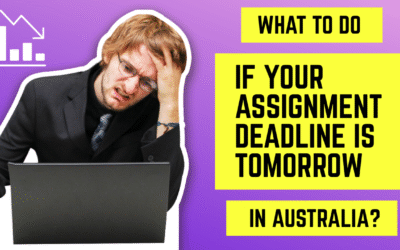
The night before submission is never calm. You’re staring at your screen, rereading your assignment, and a thought won’t leave your head: What if this gets flagged?
You didn’t copy-paste anything. You didn’t ask ChatGPT to “write my whole essay.” Maybe you used it to reword a paragraph, clean up grammar, or get unstuck when your brain shut down. Still, the anxiety is real because everyone keeps saying Turnitin can detect AI now.
If you’re an Australian university student trying to make a safe decision, this article is for you. Not scare tactics. Not tech hype. Just how the turnitin AI checker actually works in practice and where students usually get into trouble without realising it.
What Australian Students Are Really Afraid Of and Why Does Fear Make Sense?
Assignments stack up. Feedback is vague. Academic writing expectations feel unspoken. For international students, there’s the extra pressure of visa conditions and progression rules. One integrity issue can spiral fast. So when universities announce AI policies and Turnitin rolls out AI detection features, fear spreads faster than facts. Students assume:
- Turnitin can see everything
- Any ChatGPT use = automatic misconduct
- There’s no room for explanation
None of that is fully true but some of it is risky if misunderstood.
Can Turnitin Detect ChatGPT in Australian Universities?
Short answer: Turnitin does not detect ChatGPT the way plagiarism detection works. Longer, more honest answer: the turnitin AI checker looks for patterns, not proof. Turnitin’s AI writing indicator doesn’t compare your work to a database of ChatGPT outputs. It analyses linguistic signals like predictability, sentence structure consistency, and probability patterns common in AI-generated text.
That means two important things students rarely hear:
- AI detection is probabilistic, not definitive
- Human-written work can still look “AI-like” under certain conditions
Australian universities know this. That’s why Turnitin’s AI score is not used alone to accuse students.
How the Turnitin AI Checker Is Actually Used in Practice?
In real marking environments, Turnitin is a screening tool, not a judge.
Here’s what typically happens behind the scenes:
- Your assignment is submitted through Turnitin
- Tutors or academic integrity teams interpret the report
An AI percentage does not equal misconduct. What triggers concern is mismatch.
Examples:
- Your previous work sounds very different
- The assignment shows advanced academic language with basic referencing mistakes
- You can’t explain your argument when questioned
That’s where human judgement enters, not the software alone.
Why Some ChatGPT-Assisted Work Gets Flagged and Some Doesn’t?
This is the part most blogs avoid. Students run into trouble not because they “used AI,” but because of how they used it.
High-risk usage patterns
- Submitting large blocks of AI-generated text unchanged
- Using ChatGPT to write introductions and conclusions verbatim
- Relying on AI-generated references that don’t exist
- Producing polished language without understanding the content
These patterns create uniformity and predictability exactly what the turnitin AI checker is trained to notice.
Lower-risk, responsible usage
- Using AI to brainstorm ideas, then writing in your own voice
- Asking for structural feedback, not full paragraphs
- Editing your own draft with AI suggestions selectively
- Improving clarity without changing meaning
Universities increasingly accept the second category as long as policies are followed.
The Grey Area Students Misunderstand Most
Many students assume there are only two options, AI use is completely banned or AI use is completely safe. Australian universities sit somewhere in between. Most policies focus on authorship and transparency, not tools. If AI replaces your thinking, it’s a problem. If it supports your learning, it may be acceptable.
What matters more than the tool is:
- Can you defend your ideas?
- Does the work reflect your academic level?
- Did you misrepresent authorship?
Turnitin doesn’t answer those questions. Humans do.
Common Mistakes That Trigger Unnecessary Risk
Let’s be blunt, these mistakes cause more trouble than students expect.
Mistake 1: Over-polishing weak understanding
Assignments that sound too perfect but lack depth raise red flags.
Mistake 2: Panic-editing with AI at the last minute
Running an entire draft through AI to fix it quickly often removes your natural voice.
Mistake 3: Assuming Turnitin is the only check
Universities also look at:
- Writing consistency across submissions
- Viva-style questioning
- Tutor familiarity with your style
Mistake 4: Ignoring your university’s AI policy
Policies differ. Not checking yours is a bigger risk than AI itself.
A Safer Framework for Using AI Without Crossing the Line
If you’re going to use AI tools at all, use this mental checklist before submitting:
- Origin: Did I create the core ideas and arguments?
- Voice: Does this sound like how I usually write?
- Understanding: Could I explain every paragraph if asked?
- Policy: Does this comply with my unit’s AI guidelines?
- Transparency: Would I be comfortable disclosing how I used AI?
If any answer feels shaky, revise before submission.
What Happens If Turnitin Flags AI Content?
Contrary to horror stories online, flags don’t equal punishment.
A typical process that is being followed by the tutor reviewing the submission, context is considered like discipline or prior work, sometimes students are asked for clarification, only then does integrity assessment begin if needed.
Students who understand their work and can explain it usually resolve issues without penalties.
Final Thoughts: Less Fear, More Awareness
The question isn’t really “Can Turnitin detect ChatGPT?”
It’s “Can you stand behind the work you submit?”
The turnitin AI checker is not out to trap stressed students. It’s a signal one input among many. Australian universities care far more about learning, integrity, and consistency than about whether a sentence might look AI-generated.
Use tools carefully. Write with understanding. Keep your voice intact. If you do that, you’re not just safer, you’re genuinely learning. And that’s the one thing no detection system can fake.