If you’re a student in Australia right now, chances are you’ve already used AI in some form. Maybe it was to fix awkward sentences. Maybe it helped you understand a concept that just wasn’t clicking. Or maybe, during a stressful week, you wondered if letting AI do a bit more of the work would really matter.
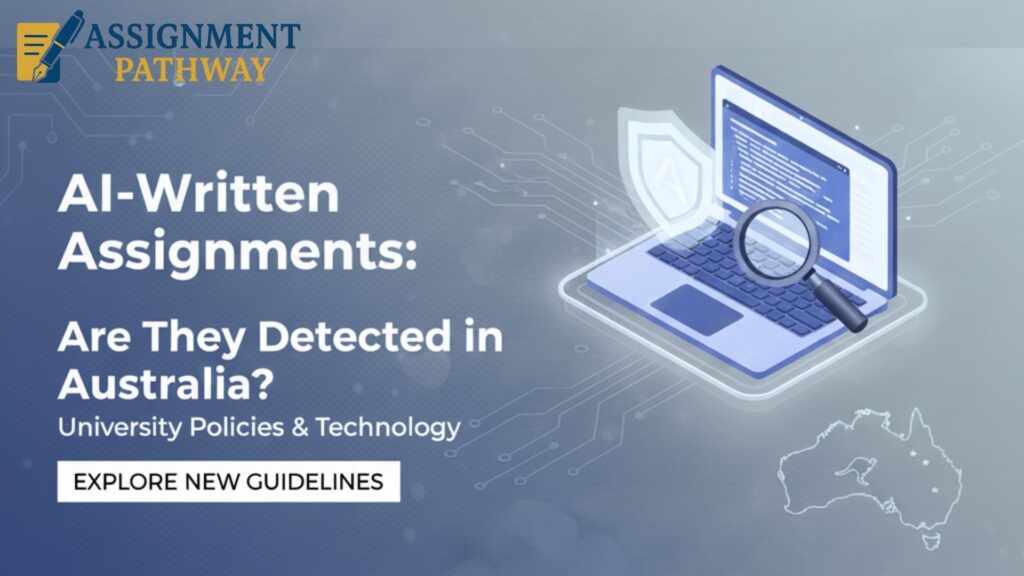
Australian universities don’t rely on a single “AI detector” that automatically flags work as written by a machine. Instead, detection usually happens through a combination of technology and human judgment.
That’s where the anxiety starts.
Students don’t usually ask, “Can universities detect AI?” out of curiosity. They ask because they’re worried. About grades. About being accused of misconduct. About doing something wrong without fully understanding the rules. So let’s clear the noise and talk honestly. Yes, AI-written assignments can be detected in Australian universities. But the situation isn’t as simple as a machine automatically “catching” you. What matters more is how the work was produced, how it reads, and whether it aligns with academic integrity expectations.
Do Australian Universities Actually Detect AI-Written Work?
Australian universities are not sitting there relying on one magic AI detector. Detection usually happens through a combination of tools, academic judgment, and assessment design. Most universities treat submitting AI detected work as your own as academic misconduct. That puts it in the same category as plagiarism. Even if no software raises a clear alert, lecturers still review submissions carefully. And when something doesn’t feel right, they investigate further.
How Universities Identify AI-Written Assignments?
1. Turnitin AI Indicators
Turnitin is widely used across Australian universities, and it now includes AI-writing indicators. These don’t “prove” anything on their own. They simply highlight sections that might be AI-generated. Importantly, universities don’t treat an AI score as a verdict. It’s used as supporting evidence, not a final decision.
2. Why standard plagiarism Still important
AI content can still trigger plagiarism flags, especially when it closely mirrors existing online material or academic sources. Many students assume AI always produces “original” content, but that’s not always how it works in practice.
3. Professor Feedback
Professor feedback patterns. Common red flags include:
- A Sharp improvement in writing quality
- Grammatically correct with minimum depth or original insight
- Lack of integration and course specific material
- Reference that can not be verified or do not support the stated claim
- Human judgment is very important
4. Follow-Up Questions or Oral Explanations
Some universities now ask students to explain their work, either informally or through structured oral assessments. If a student struggles to explain ideas they supposedly wrote, concerns escalate quickly.
Are AI Detection Tools Always Accurate?
No. And universities know that. AI detection tools can: Flag human-written work as AI , Miss AI-generated content entirely. Because of this, Australian universities rarely rely on software alone. Decisions are usually based on a pattern of evidence, not a single score. That said, even if a student believes a flag is wrong, challenging an allegation can be stressful, time-consuming, and emotionally draining. Avoiding the situation altogether is always safer.
What Happens If AI Misuse Is Found?
Consequences depend on the university and the severity of the case, but outcomes can include:
- Loss of marks or a zero for the assignment
- Being asked to resubmit
- Formal academic misconduct warnings
- Failing the unit
- Suspension or, in extreme cases, expulsion
Australian universities protect their academic standards very seriously. That’s not just about rules—it’s about maintaining the global value of their degrees.
Final Thoughts
Should you worry about AI detection in Australia? Yes—but not out of panic. The real issue isn’t being “caught by a tool.” It’s whether your work genuinely reflects your learning. Universities use software, yes but they rely just as much on academic judgment, experience, and context. AI-written assignments can be detected, but more importantly, they often fail to do what assignments are meant to do: show your thinking. If you use AI carefully, transparently, and as a support rather than a shortcut, you’re far less likely to run into trouble—and far more likely to succeed academically.
FAQs
1. Are AI Tools Completely Banned in Australian Universities?
No AI is not completely banned in Australian universities, many universities allow students to use AI in their academic task to create new ideas and grammar checks
2. Do Australian universities check assignment for assignment for AI Use?
Yes most Australian universities review assignments using a combination of copy content detection tools and human academic judgement.