The Moment Every Student Fears. It usually begins with an unexpected email, formal, neutral, and unsettling. A line about “potential academic integrity concerns” is enough to make your stomach drop. For many international students, that message immediately raises frightening questions: Will I fail the unit? Could this affect my visa? Will my family find out?
Plagiarism in Australian universities is not treated as a minor academic slip. It’s connected to trust, authorship, and whether your qualification genuinely reflects your ability. The good news is that being flagged does not automatically mean disaster. Understanding how universities handle plagiarism and where students often go wrong can make a huge difference to the outcome.
What Australian Universities Actually Count as Plagiarism?
One of the biggest shocks for students is realising plagiarism is not limited to copy-paste. Universities consider it plagiarism when students submit work that is not genuinely their own, even if no single sentence is directly copied.
This includes writing that is too closely paraphrased, reusing parts of an old assignment without permission, submitting work written by someone else, or using AI-generated content where disclosure or use is restricted. Many international students do not intend to cheat, they simply apply learning habits from their home country that do not align with Australia academic standards, where original thinking and proper attribution matter deeply.
How Universities Detect Plagiarism?
Most of the assignments are checked through plagiarism detection systems that scan against academic journals, online sources and past student submissions. But the final judgement is never made by software alone.
Lecturers often notice warning signs such as a sudden jump in language quality, writing that sounds nothing like a student’s previous work, or references that don’t actually match the argument. To truly check the plagiarism free, your work must reflect your own understanding, with sources used correctly and transparently.
What Happens After Plagiarism Is Flagged?
The process usually unfolds in stages rather than all at once. Initially your lectures review the case to see whether the issues look minor or serious. Small referencing mistakes are often handled informally, especially for first time offences.
If the case appears more serious, it moves to a formal academic integrity review. You’ll receive an official notice and may be asked to explain how the work was produced. This stage is crucial. Universities are not just checking the text they are assessing intent, understanding, and honesty.
Possible Consequences And Why They’re Not the Same for Everyone?
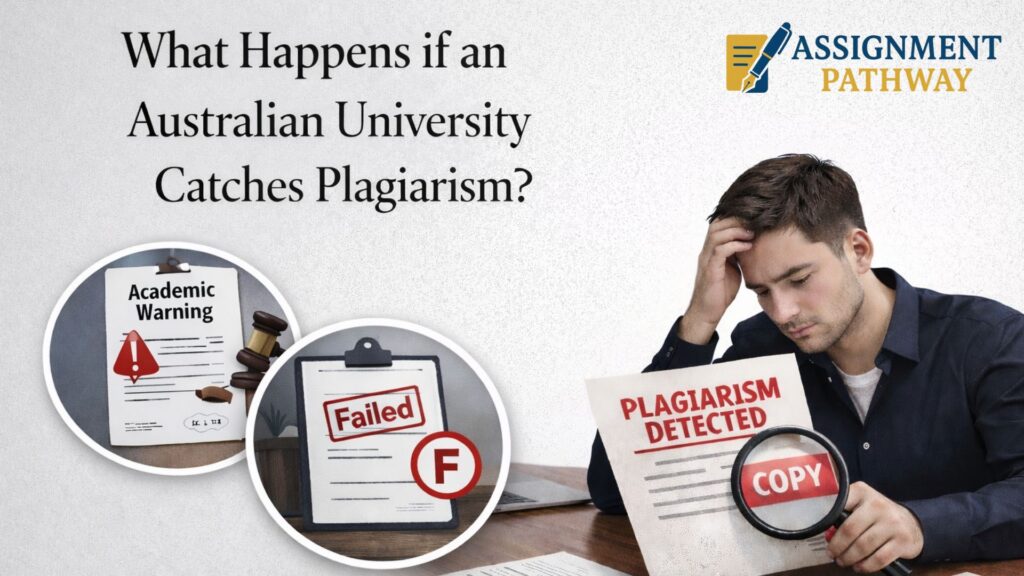
There is no one-size-fits-all penalty for plagiarism in Australia. Outcomes range widely. Some students receive warnings or are asked to resubmit. Others may lose marks or receive a zero for the assignment. In more serious cases, failing the unit is possible.
Does Plagiarism Affect an International Student Visa?
This concern causes a lot of unnecessary panic. A single plagiarism incident does not cancel a student visa. However, repeated failures, academic suspension, or exclusion from a course can indirectly breach visa conditions related to satisfactory academic progress.
If we say in simple words, plagiarism becomes a visa risk only when it keeps repeating or it leads to serious academic penalties. Handling one mistake responsibly is unlikely to escalate.
Where Students Make Things Worse Than They Need To?
Many students unintentionally damage their own case after being caught. Some panic and avoid responding to university emails. Others submit copied explanations from the internet or blame language barriers aggressively instead of calmly explaining their situation. A common mistake is continuing to submit assignments without fixing the underlying issue, assuming they won’t get caught again.
Universities respond far more positively to students who acknowledge the problem, show willingness to learn, and demonstrate improvement.
How to Protect Yourself Going Forward?
Avoiding plagiarism is less about fear and more about habit. Understanding your referencing style before you start writing makes a huge difference. Writing drafts in your own words first then refining structure and clarity helps prevent accidental copying.
When you check plagiarism free, look beyond numbers. Ask whether the ideas make sense in your voice and whether every borrowed concept is clearly credited. Keeping drafts and research notes also helps demonstrate your process if questions arise later.
Most importantly, use academic support services. Asking questions early is always safer than guessing under pressure.
The Takeaway That Actually Matters
Being caught for plagiarism at an Australian university is serious but it’s not the end of your academic journey. What matters is how you respond and what you change next.
When you learn to write independently, reference correctly, and genuinely check the plagiarism free before submitting not just with tools, but with understanding you move from fear to confidence. Australian universities don’t expect perfection. They expect honesty, effort, and growth. One careful decision today can safeguard your future far more than any shortcut ever could.