

If you ever started at a blank page wondering where to begin, you are not alone. Essay writing becomes overwhelming when you try to write without planning. The truth is planning is the framework of writing any essay. It shapes your idea, strengthens your essay and saves you hours of rewriting it.
Whether you are in school, writing essays for your academics or writing essays for college admission, mastering a simple essay writing can help you to boost your confidence instantly. This guide breaks down essay planning into easy steps, enhanced with real world examples.If you’re searching for effective essay writing help, this is where to start.
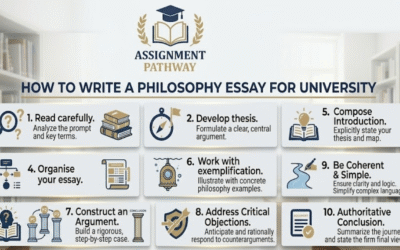
Step 1 – Understand the Essay question
Every essay starts with the crystal clear understanding of the prompt. Many students tend to skim the questions and jump right into writing, without giving it a thought, only to understand later that they have misunderstood the topic.
How to analyse your essay questions?
- Identify task words- such as evaluate, compare, discuss, justify.
- Spot key- concepts define what your essay must cover.
- Determine limitations- time period, specific theory, region, etc.
Example- If your topic is “Impact of social media on academic performance” so here the keyword “impact” suggests that you need to tell both positive and negative impact of social media.
This analytical step ensures your essay remains focused and prevents irrelevant content.
Step 2 – Conduct purposeful research
Beginners often fall into the trap of collecting too much information or reading without directions. Instead try targeting research.
Use this quick strategy:
- Start your research with more credible resources that are books, official websites and journals.
- Skim for strong argument, examples and supporting research.
- Note down all the necessary and important key points, not full paragraphs.
Pro tip: Keep a digital document where you can store all the necessary points, you can use MS Excel to organise your research, that will later be used to structure your essay.
Purposeful research makes the planning stage faster and eliminates information overload, one of the biggest reasons students seek essay writing help online.
Step 3 – Brainstorm and organise Ideas
Brainstorming helps to generate multiple ideas and to make sense of everything you have help, you can always take help of your friends to generate ideas. Think of it as dumping your thoughts onto papers before arraying them neatly.
Here are some popular brainstorming techniques:
- Mind maps – visually connect main ideas and supporting points.
- Free writing – write continuously for 5 minutes to generate ideas.
- Sticky notes method – write one idea per note and rearrange.
This step allows you to discover patterns and decide which ideas are strong enough to make up to your essay .
Step 4 – Create a clear Thesis Statement
A thesis is an important part of your essay. Without it your essay looks directionless.
A strong thesis should:
- Present your position clearly.
- Show what your essay will discuss.
- Provide a roadmap readers.
Step 5 – Build a logical easy outline
A well planned essay helps you to structure your essay and make it chaos free. It makes the essay look polished and makes it high scoring.
A powerful outline format includes :
Introduction
1. Hook
2. Context
3. Thesis Statement
Body paragraph 1
1. Main argument
2. Evidence
3. Real world experience
Body paragraph 2
1. Supporting arguments
2. Data and facts
3. Link to thesis
Body paragraph 3
1. Counter arguments
2. Your rebuttal
3. Transaction to conclusion
Conclusion
1. Summary
2. Final reflection
3. Call to action or insight
With an outline like this, writing the full essay becomes almost effortless.
Step 6: Add real life evidence and examples
Most beginners tend to write essays that sound generic and don’t add personal touch to it. To stand out you need to add real life experience to it. What separates an average essay from an impressive one is the quality of examples.
Think about adding:
- Case studies
- Statistics
- Personal observations
- Historical references
- Classroom experiences
Review, refine and polish
Great essays aren’t written, they are rewritten. After completing your draft, revise with purpose.
Checklist to follow:
- Does every paragraph link back to the thesis?
- Are ideas flowing smoothly with transition words?
- Is the tone consistent and academic?
- Did you avoid repetition and wordiness?
- Is grammar clean and professional?
If revision feels confusing, this is where professional essay writing help can make a huge difference.
Conclusion : Your essay planning journey starts now
Essay planning isn’t about creating extra work, it is about making your writing easy, fast and more meaningful. When you understand the question, organise your research, brainstorm creatively, and build a strong outline, your essay naturally becomes clearer and more convincing.
Whenever you are preparing for school assignment or university submission, this beginner friendly guide helps you give a strong foundation you need to write confidently. And whenever you need guidance or expert strategies, reliable essay writing help is just a click away.
Master the plan, and the essay will follow.



На этом сайте вы сможете найти обилие ценной сведений.
https://bitwatch.ru/horlogerie/3506-tekhnologii-i-materialy-v-krossovkakh-liu-jo/
Controlled play is an approach that promotes participants to sustain oversight over their gaming decisions while acknowledging the inherent risks.
https://www.mapleprimes.com/users/IvanRogov2026
Responsible gambling is an approach that promotes players to maintain oversight over their gaming engagement while noticing the likely pitfalls.
https://zhkhtv.ru/
Тут легко ознакомиться реестр общедоступной информации.
В этом каталоге представлены телефоны компаний и индивидуальных предпринимателей.
Данные считаются открытыми и способны использованы в целях поиска данных.
Портал регулярно пополняется, чтобы пользователь в любой момент имели свежей базой.
https://orq.me/
Digital adventures present enthusiasts the great way to engage and compete with gamers globally.
https://denieuweburen.com/?p=5128
Обязательный диагностика является ключевой мерой для сохранения безопасности транспортного средства.
В ходе осмотра находятся незаметные поломки, которые могут стать причиной аварии на пути.
Регулярное прохождение техосмотра дает возможность избежать серьёзных затрат на дорогостоящий ремонт в перспективе.
Также исправный автомобиль гарантирует спокойствие водителя и пассажиров в пути.
Техосмотр грузовиков
Стимуляция поведенческих факторов — это способ искусственного завышения ранга в SERP.
Она связана с воспроизведение поведения клиентов: переходы, просмотры и время визита.
Однако данные манипуляции могут спровоцировать фильтры Google и Яндекса и снижение видимости.
Таким образом лучше использовать только легальные техники оптимизации.
недорогая накрутка поведенческих факторов
Операторы ставок являются профессиональные сервисы, что предлагают пари на самые разные матчи.
Основная задача букмекера — дать коэффициенты на любое результаты встречи, показывающие шансы определённого варианта.
Выбирая букмекера следует обращать внимание на существование лицензии, имидж и удобство сайта.
Надёжный оператор гарантирует справедливые условия, большую линию и мгновенную поддержку игроков.
бонусы бк без депозита